
How can you tell whether a roof needs replacement?
A roof usually needs replacement when age, widespread deterioration, recurring leaks, or damaged underlying materials make repairs temporary or unreliable. A few missing shingles do not automatically mean the entire roof must come off, but multiple warning signs together deserve careful attention.
For homeowners in Peru, NY, roof condition is affected by repeated freeze-thaw cycles, snow loads, wind, ice, rain, and summer heat. These seasonal changes can gradually weaken shingles, flashing, ventilation systems, and roof decking.
The most useful question is not simply, “How old is the roof?” It is, “Can the roof still protect the house reliably through another cycle of local weather?”
How old is too old for a roof?
Asphalt shingle roofs commonly last roughly 15 to 30 years, although actual service life varies. Materials, installation quality, attic ventilation, roof slope, shade, storm exposure, and maintenance all influence the timeline.
Age alone does not prove that replacement is necessary. A well-maintained roof may perform acceptably near the upper end of its expected life, while a poorly ventilated or storm-damaged roof may fail much sooner.
Age becomes more concerning when combined with:
- Brittle, cracked, curled, or missing shingles
- Repeated repairs in different areas
- Granules collecting in gutters or downspouts
- Leaks after ordinary rain
- Sagging roof lines
- Damaged flashing around chimneys, vents, skylights, or wall intersections
- A history of ice buildup or winter water intrusion
If the roof is approaching the end of its expected life, planning ahead is generally safer than waiting for a major leak during a snowstorm or prolonged wet weather.
Which visible shingle problems indicate replacement?
Some shingle damage can be repaired, but widespread surface deterioration often points toward replacement.
Look for shingles that are:
- Curling at the edges
- Buckling across the surface
- Cracked or split
- Missing tabs or entire sections
- Loose around roof edges and penetrations
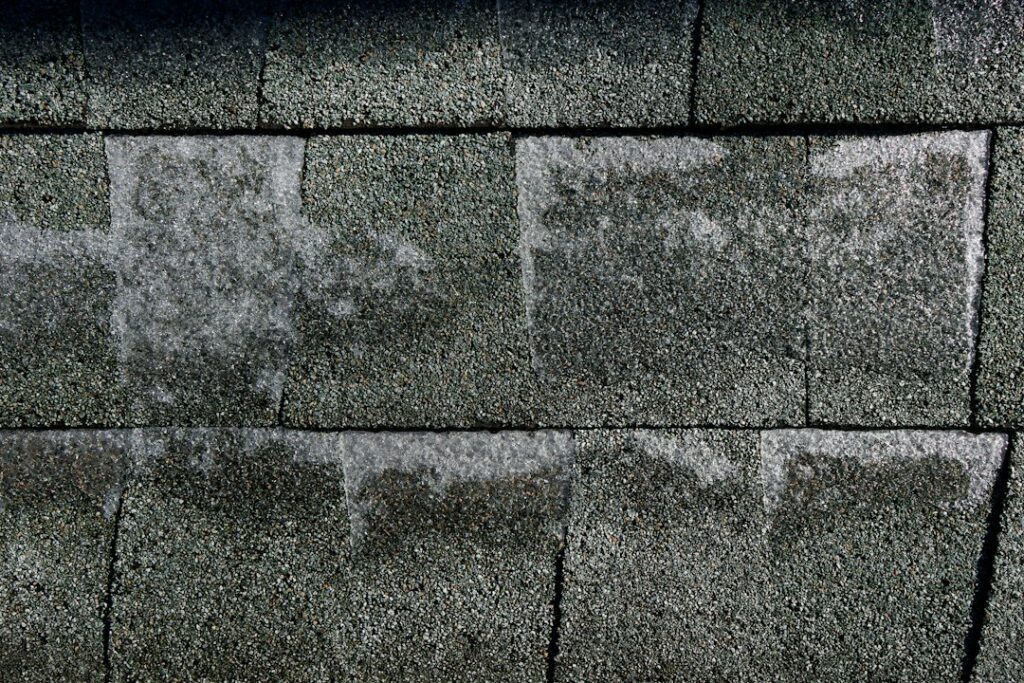
- Darkened by persistent moisture or algae growth
- Bare in spots where the protective granules have worn away
Granules in gutters are not automatically an emergency, especially after a new roof is installed. On an older roof, however, heavy or continuing granule loss can indicate that the shingles are losing their protective surface.
Curling and cracking also make shingles more vulnerable to wind and water. In a cold-weather area, small openings can become larger as trapped moisture freezes and expands.
Do leaks always mean the entire roof must be replaced?
No. A single, clearly localized leak may be repairable, particularly when the roofing material is otherwise in good condition. Leaks around flashing, pipe boots, or a small storm-damaged area do not automatically require full replacement.
Replacement becomes more likely when:
- Leaks appear in several unrelated locations
- Repairs have not stopped the problem
- Water has reached the roof decking or framing
- The shingles are already old or brittle
- The leak source cannot be reliably isolated
- Interior stains return after repairs
- Moisture has caused mold, rot, or insulation damage
A ceiling stain may not be directly below the roof defect. Water can travel along rafters, sheathing, insulation, or wiring before appearing indoors. That is why covering an interior stain without finding the source often fails to solve the underlying problem.
What does the attic reveal about roof condition?
The attic can provide evidence that is not visible from the ground. Inspect only from a stable, safe location; do not walk on roof framing or insulation without appropriate precautions.
Signs of roof-related trouble may include:
- Damp or darkened roof decking
- Rusted nails or fasteners
- Wet insulation
- Daylight visible through the roof deck
- Musty odors
- Mold-like growth caused by persistent moisture
- Frost or condensation during cold weather
- Sagging areas between rafters
Not every attic moisture problem means the roof covering has failed. Poor ventilation, air leakage from the living space, bathroom exhaust problems, and high indoor humidity can also create condensation. Correctly separating a roof leak from a ventilation or moisture issue is essential before deciding on replacement.
How do winter conditions affect roofs in Peru, NY?
Snow and ice do not automatically mean a roof needs to be replaced, but they can expose weaknesses that remain hidden during milder weather. Heavy snow adds weight, while repeated melting and refreezing can move water beneath shingles and around roof edges.
Ice buildup near eaves may contribute to water backing up beneath the roof covering. Roofs with limited insulation or ventilation can be more vulnerable because warm areas may melt snow unevenly.
After winter, inspect for:

- New ceiling stains
- Loose or missing shingles
- Bent or displaced metal flashing
- Gutter sections pulled away from the house
- Damage around roof edges
- Icicle-related impact
- Sagging roof lines
- Water damage in the attic
Snow should not be removed from a roof casually. Improper shoveling or scraping can damage shingles and create a personal safety hazard. Roof access is especially risky when surfaces are icy or wet.
Can a roof be repaired instead of replaced?
Repair is often reasonable when damage is limited and the rest of the roof has substantial remaining life. Replacement is more practical when repairs are frequent, widespread, or unable to address deterioration beneath the shingles.
A repair may make sense for:
- A small number of wind-damaged shingles
- Isolated flashing failure
- A failed pipe boot
- Limited damage from a fallen branch
- A small section with otherwise healthy surrounding materials
Replacement deserves stronger consideration when the roof has multiple damaged areas, deteriorated decking, persistent leaks, or shingles that are no longer flexible enough to seal properly.
The condition of the roof deck matters. Shingles may look acceptable from outside while the wood beneath has softened from long-term moisture. Installing new roofing over damaged decking can leave a serious problem unresolved.
What should homeowners check before replacing a roof?
Before making a decision, gather a clear picture of the roof’s history and condition.
Useful questions include:
- When was the roof installed?
- Has it ever been replaced or layered over?
- Have leaks occurred more than once?
- Were previous repairs temporary or permanent?
- Is damage concentrated on one slope or spread across the roof?
- Does the attic show moisture, condensation, or poor airflow?
- Are gutters and downspouts directing water away from the foundation?
- Does local code require review or permitting for the planned work?
Roof replacement can involve more than shingles. Flashing, underlayment, ventilation, drip edges, decking, and ice-resistant details may all affect long-term performance. The right scope depends on the roof’s design and the condition found beneath the existing covering.
When is replacement urgent?
Some conditions should not wait for a convenient season. Urgent attention is warranted when there is active water entering the home, a visibly sagging roof, extensive storm damage, exposed decking, large areas of missing shingles, or signs that structural materials are weakening.
Keep people away from areas with sagging ceilings or falling debris. If water is near electrical fixtures, avoid contact with the fixture and use caution around the affected area.
For less urgent problems, documenting damage with dated photographs and checking the attic after heavy rain can help reveal whether a problem is expanding. A roof that is not yet failing may still be close enough to the end of its service life that delaying action creates unnecessary risk during the next severe season.
