
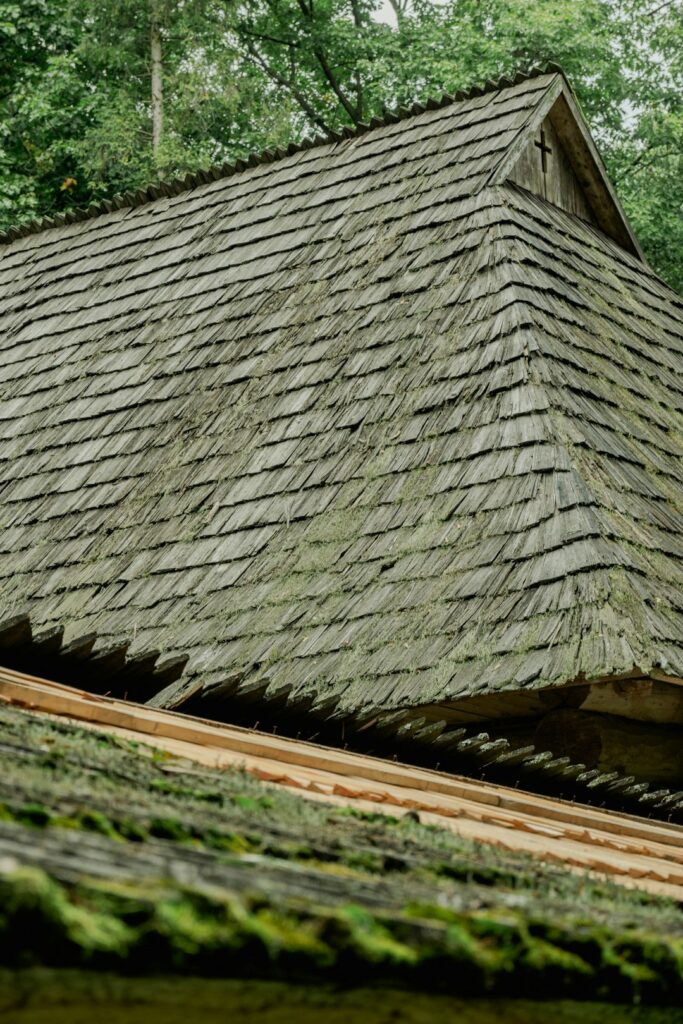
What Do Mold and Mildew Look Like on a Roof?
Mold and mildew on roofing materials usually appear as irregular black, green, gray, brown, or white patches. They are most noticeable where moisture remains for long periods, such as shaded roof slopes, areas beneath overhanging trees, valleys, and places near clogged gutters or slow drainage.
The appearance can vary by roofing material and age. Common signs include:
- Dark stains that expand or become more defined over time
- Fuzzy, powdery, or slightly raised growth
- Green or yellow-green patches
- Black streaks running downward from roof shingles
- A musty odor near the attic or upper floors
- Damp roof sheathing, insulation, or rafters visible from inside the attic
- Shingles that remain wet longer than surrounding areas
A roof does not need to be visibly covered in growth to have a moisture problem. Small patches around flashing, vents, chimneys, or roof edges may indicate water is collecting or entering beneath the surface.
Is It Mold, Mildew, Algae, Moss, or Dirt?
Not every dark or green mark on a roof is mold. Identifying the growth correctly helps determine whether the concern is cosmetic, related to moisture, or connected to possible roof damage.
Mildew is generally a surface growth that appears powdery, gray, white, or lightly colored. It often develops where moisture and limited airflow allow organic material to remain damp.
Mold may look fuzzy, blotchy, or layered. It can grow on damp wood, roofing debris, insulation, and other materials. Mold is more concerning when it appears in the attic or on materials that are part of the home’s interior structure.
Algae commonly produces dark blue-green or black streaks on asphalt shingles. These streaks may be mistaken for dirt or soot. Algae can spread across areas that stay damp but does not necessarily mean the roof is leaking.
Moss is thicker and more plant-like. It may form soft green clumps along shingle edges, in roof valleys, or beneath tree cover. Moss can lift or separate shingles as it grows, allowing water to move underneath.
Dirt and soot usually sit loosely on the surface and may wash away or change noticeably after rain. Growth tends to remain attached, spread unevenly, or return after cleaning.
Why Are Roofs in Peru More Prone to This Growth?
The local climate provides several conditions that encourage biological growth on roofing materials. The area experiences humid weather, regular rainfall, freezing temperatures, and substantial winter snow. Roofs may remain damp during spring thaw, rainy periods, and long stretches of cloudy weather.
Shade also matters. Roof sections beneath mature trees or close to taller structures receive less sunlight and dry more slowly. Fallen leaves, needles, and small branches can trap moisture against shingles. In autumn, roof debris may remain in valleys or behind roof penetrations until it is removed by wind or maintenance.
Older homes and buildings may have roof designs with enclosed valleys, limited ventilation, or aging flashing. These features do not automatically cause mold or mildew, but they can make moisture problems harder to notice.
Where Should Homeowners Look First?
A visual inspection from the ground can reveal many warning signs without requiring anyone to walk on the roof. Use binoculars if needed and examine:
- North-facing or heavily shaded slopes
- Roof valleys where water and debris collect
- Areas below overhanging branches
- Shingle edges that appear lifted or covered in moss
- Roof sections near chimneys, plumbing vents, skylights, and wall intersections
- Gutters and downspouts that overflow during rain
- Stains on exterior walls or soffits below the roofline
Inside the attic, look for dark discoloration, damp wood, peeling surfaces, rusty fasteners, or insulation that appears compressed or wet. A musty odor can be an early sign of moisture even when visible growth is limited.
Roof growth itself does not prove that the roof leaks. However, growth combined with damp decking, interior staining, or recurring moisture deserves closer evaluation.
Can Mold or Mildew Damage the Roof?
Surface mildew and algae may have little immediate effect on a sound roof, but persistent moisture can shorten the service life of roofing materials. Moss presents a more direct physical risk because its roots and mass can lift shingle edges and hold water against the roof.
Moisture can also contribute to:
- Premature granule loss from asphalt shingles
- Deterioration of wood roof decking
- Rot around roof edges, valleys, and penetrations
- Corrosion of metal flashing and fasteners
- Leaks that become visible only during heavy rain or snowmelt
- Damp insulation and poor attic performance

A roof that appears stained but remains dry may need monitoring. A roof with active growth, damaged shingles, or wet structural materials requires more prompt attention.
How Can Roof Growth Be Checked Safely?
Walking on a roof can damage shingles and is especially dangerous when the surface is wet, frosted, steep, or covered with moss. A safer first step is a ground-level inspection followed by an attic check from inside the home.
Avoid scraping, brushing, or pressure-washing shingles from a ladder or roof surface. Aggressive cleaning can remove protective granules, break brittle shingles, loosen flashing, and push water beneath the roofing material.
If inspection from the ground suggests extensive growth, structural damage, or unsafe access, evaluation by a qualified roofing or building professional is appropriate. This is particularly true when the roof is steep, more than one story high, or affected by ice, snow, or suspected rot.
What Should Be Done About Mold or Mildew?
The correct response depends on whether the growth is only on the surface or connected to a moisture source. Cleaning alone will not solve recurring growth if water continues to collect or enter the building.
Useful maintenance steps include:
- Keeping gutters and downspouts clear so rainwater can drain properly
- Removing leaves and branches that remain on the roof
- Trimming vegetation that keeps roof surfaces shaded and damp
- Checking attic ventilation and insulation for condensation problems
- Watching for damaged flashing, missing shingles, and exposed roof decking
- Drying damp attic materials promptly after a leak
- Avoiding household bleach mixtures or improvised chemical treatments on roofing
Roof-cleaning methods must match the roofing material. Asphalt shingles, wood roofing, metal panels, and low-slope membranes can react differently to chemicals, brushing, and water pressure. Product labels and roofing-material instructions should be followed carefully.
When Is the Problem More Serious?
Mold or mildew deserves prompt attention when it appears with interior water stains, sagging ceiling materials, damp insulation, peeling paint, or a persistent musty smell. These signs suggest that moisture may have moved beyond the exterior surface.
Extra caution is also appropriate if anyone in the household has asthma, allergies, or sensitivity to mold. Avoid disturbing large areas of growth without suitable protective measures. Extensive indoor mold, concealed growth, or damage involving insulation and structural wood may require specialized assessment.
For local residents, seasonal checks are especially useful in late spring after snowmelt, after periods of heavy rain, and in autumn after leaves have accumulated. Finding and correcting the moisture source is usually more valuable than simply removing the visible stain.
